
- This event has passed.
Woods Hole Film Festival: The Shepherd and the Bear
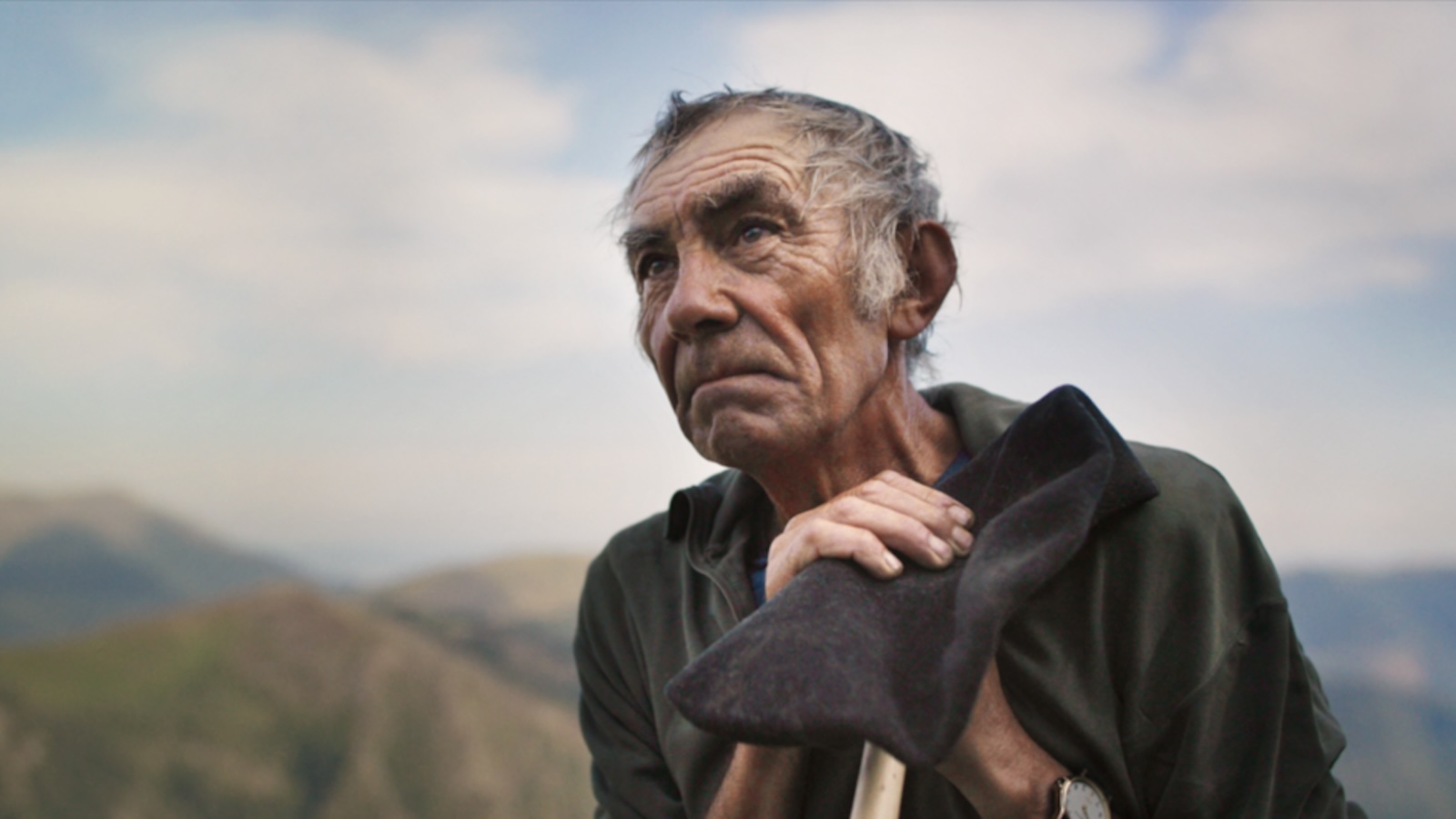
The Woods Hole Film Festival’s Dinner & A Movie series presents the feature documentary, The Shepherd and the Bear, on Saturday, March 28, at 7 PM, in Redfield Auditorium, Woods Hole Oceanographic Institution, Doors open at 6:30 PM.
The film is by Max Keegan, UK/US/France, 2025, 101 minutes, French with English subtitles.
Tickets: $18 general admission | $14 members | $10 students & military
Set high in the majestic French Pyrenees, The Shepherd and the Bear explores a conflict provoked by the reintroduction of brown bears amid a traditional shepherding community. The film follows an aging shepherd who struggles to find a successor as bears prey on his flock, and a teenage boy who becomes obsessed with tracking the bears. Through its breathtaking cinematography and immersive storytelling, The Shepherd and the Bear is a modern folktale about tradition, community and humanity’s relationship with a vanishing natural world.
The film was nominated for Cinema Eye Award and British Independent Film Award.
Director’s Statement:
The French state started releasing Slovenian brown bears into the Pyrénées in 1996 as part of an EU-wide program called LIFE. At this point there were just five Pyrenean brown bears left. The decision to release apex predators into a region whose primary industry is traditional open range sheep farming was immediately controversial. Not just because of the potential dangers this posed, but also because of who was perceived to have taken this decision–farming communities across Europe have faced increasing economic hardship and political marginalization for decades, and there was little local consultation for this project legislated for a world away in urban Paris and Brussels.
On both sides of the debate, the bear represents different fears. For the ecological lobby, it’s the fear that humanity has overreached itself. The bear is a manifestation of mother nature – it’s a powerful figure that can take back the reins from us and manage the environment outside of our corrupting influence. For the anti-bear farmers, the bear is an aberration foisted on them by distant powers. Something that represents the state’s irreverence of their industry and their culture at a time when both these things are already facing extreme pressures.
I didn’t want to make an activist film, a call to arms, or an exposé. These are complicated issues, and the truth is, on some level both sides are right. I wanted to make a film that captured the complexity of this story, and that humanized both sides of the debate.
Although this film takes place in the Pyrénées, it speaks to issues that affect rural communities everywhere. We are living through an era of radical and rapid change, not just environmentally, but also culturally. Urban spaces account for less than one percent of land use but now house more than half of the global population. Across the world young people are migrating, leaving villages and towns and moving to cities. The economic stresses of modern life atomize communities, sever generational relationships to the land, and threaten the perpetuation of local traditions. Hard won knowledge developed over hundreds of years is lost in the space of one absent generation.
I chose to take a cinema verité approach to the storytelling, because I felt that a character driven narrative would be more emotionally engaging and effective in bringing an audience round to understand both perspectives. By eschewing standard documentary techniques, I hope to present our subjects as sympathetic characters rather than simply as voices ‘for’ and ‘against’. We spent two years living in the Pyrénées to experience and understand this issue first-hand and deliver a human story that transcends its direct subject matter.
I don’t think that the themes this film deals with could be more urgent. We need to protect and preserve wild species where they are threatened, but we can only do so in concert with local people. Equally, we must strive to valorize and defend traditional lifestyles, which in many cases hold the keys to understanding how to live in better harmony with the natural world.
ABOUT DINNER & A MOVIE
Dinner & A Movie is part of the Woods Hole Film Festival’s Winter/Spring Film Series, featuring twice-monthly in-person screenings of independent films from September 2025 through June 2026. Screenings are held at the Woods Hole Oceanographic Institution’s Redfield Auditorium, located at 45 Water Street in Woods Hole.
Tickets are available in advance at www.woodsholefilmfestival.org and at the door if not sold out.
Before the screening, ticket holders may receive a discount on the meal portion of dinner at Quahog Republic Leeside Pub, 29 Railroad Avenue, Woods Hole.
For more information, email info@woodsholefilmfestival.org or call (508) 495-3456.